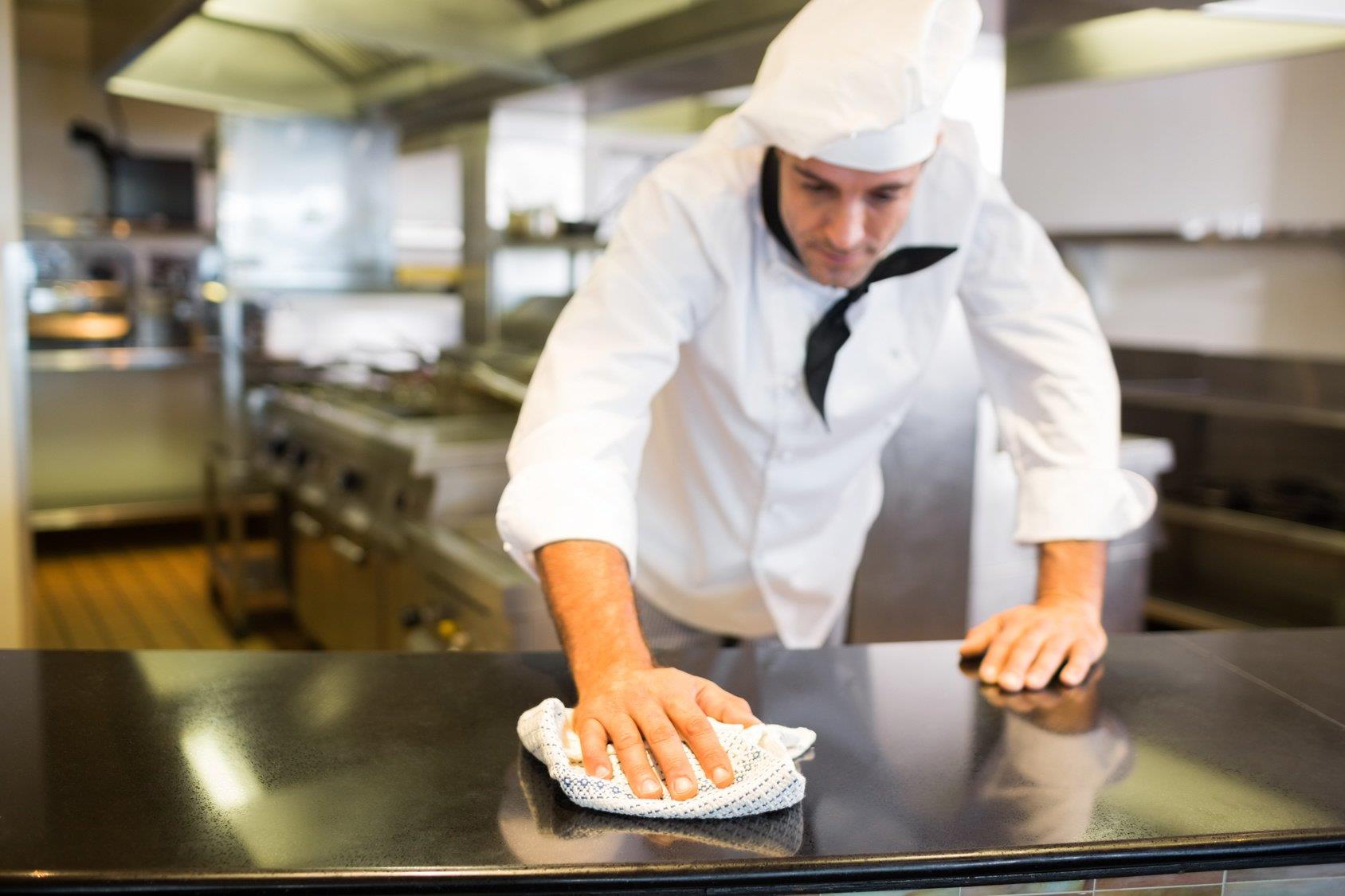
Clean premises and Waste Management will reduce the risk of contamination, avoid pest infestations and provide a safe and pleasant working environment.
Cross-contamination can pose a real risk for both staff and customers. It happens when bacteria is spread between food, surfaces or equipment and is usually the result of poor food preparation hygiene and ineffective storage.
Main Points
There are a multitude of practices that need to be considered in order to fully prevent cross-contamination such as: –
- Washing your hands thoroughly
- Keeping raw and ready-to-eat foods separate.
- Separating food storage areas and food preparation areas
- using separate cutting boards and knives
- Cleaning preparation areas.
Cleaning food preparation surfaces needs to be carried out in two stages:
- Disinfect the surface by using a suitable disinfectant and following the instructions for that particular product
- Use a cleaning product and warm water to remove visible dirt from the surface before rinsing the cloth or sponge
It’s equally important to clean equipment, taps, sinks, door handles and switches frequently as these areas are prone to germs and contamination.
Waste Management
The Environmental Protection Act 1990, section 34 places a duty of care to ensure that any waste that you produce is handled safely and within the law. Any waste from commercial premises is classified as controlled waste. You must be able to provide evidence of your trade waste contract, waste carrier licences and/or waste transfer notes for controlled waste including waste oil.
How To Avoid Blocked Drains
- Remove fat, oil and grease from equipment, plates and the floor before washing, by scraping with a disposable cloth, using brooms on the floor to sweep up debris, or using spatulas to scrape the inside and outside of pots and pans. All scrapings and cleaning materials must be disposed of in your controlled waste.
- Consider using a grease trap – this allows water to pass through the trap, while fat, oil and grease floats to the top and can be collected and disposed of without entering the drains. The trap must be regularly maintained.
Storing Oil
The oil storage area must be properly protected from leaks and spillages, and kept a suitable distance from drains, to avoid leakages into the drains. A secure container with a lid should be used to discourage vermin.
Discussion Points:-
Adopt a ‘clean as you go policy’ when you produce waste and mess and use these simple guidelines: –
- use a cleaning schedule and stick to it (this lets staff know who will clean which piece of equipment or area with which chemical, on what day, and who will check that it has been done)
- keep all chemicals locked away, and away from food
- do not pour cleaning chemicals into unmarked containers
- read chemical safety and user instructions before use
- empty and clean buckets after use
- hang brushes and mops off the floor after use, away from food rooms
- provide suitable dustbins with lids
- clean refuse areas regularly
- do not use cleaning chemical containers for food storage
- use a detergent to remove grease, and a disinfectant to kill bacteria